Vive la mode !
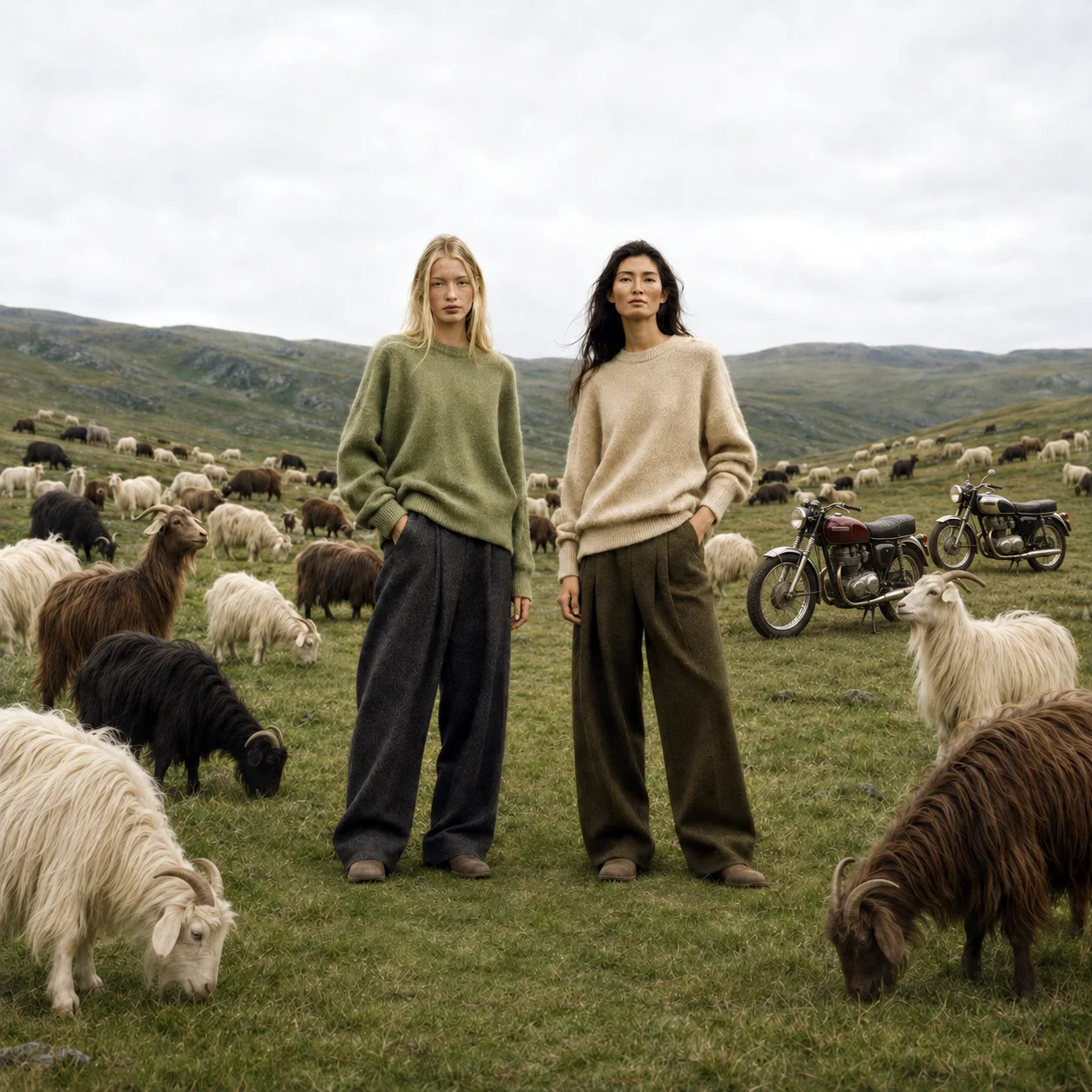
At some point, people must have invented fashion. Or did they discover it? Nietzsche might have objected that a style gradually becomes fashion when one person takes pleasure in it and others adopt it. It does not necessarily begin with some grand plan. Sometimes all it takes is someone who feels so confident in what they wear that others want to follow suit. Nietzsche even saw a benefit in this: fashion, he suggested, could build confidence and help people feel less shy around one another.
In the beginning, there was probably necessity. Clothing protected us from wind and weather, cold and sun. It was workwear, protective clothing, uniform. “Form follows function”: the shape follows the purpose. But people did not leave it at that. They embellished, dyed, cut and combined. The useful became a sign. Depending on the occasion, the uniform became a formal outfit, a disguise or a carnival costume.
Clothing is more than a covering. It protects us from the weather—and sometimes from too much exposure. At the same time, it reveals something without giving everything away. It says: This is how I want to be seen today. This is how I feel. This is what I need right now. Or perhaps: Please keep a little distance; I’m not available for everything today.
It is easy to forget this when clothing has become so familiar to us. In a prosperous society, we can stand in front of a full wardrobe in the morning and believe the only question is what goes with what. But we are playing with life, with our roles, with culture, fears and desire. We try out who we might be—and who we want to be. By evening, we can choose again. That is the luxury of fashion: its flexibility. What other creature on earth can continually show itself in a new way and transform itself?
At first, it seems that animals know nothing of fashion. Yet they, too, have their grand entrances. The peacock wears its plumage as if the world had been arranged especially for its appearance. And some newts transform into striking beauties in spring, when the breeding season begins. Whether that counts as fashion is for the newts to decide. They probably wouldn’t write a column about it.
What makes fashion fascinating is its ambiguity. It can keep us warm and entice, protect and display, show that we belong—or express the pleasure of not belonging. In As You Like It, Shakespeare has Jaques say, “All the world’s a stage, and all the men and women merely players.” Clothing is part of that performance. It is costume and everyday life at once—and sometimes it tells us more about the role we are looking for than the one we have long since settled into. Royal Shakespeare Company
This short essay has a modest aim: to make fashion respectable. There is no need to be ashamed of it, as though it were nothing but vanity or ecological carelessness. Fashion can be light, playful and personal. Here’s to the fashions that are simple and simply signal who we want to be right now.
Why “simple”? Because, of course, one can spend hours or even days thinking about clothes. Some people do so with great seriousness, others with great pleasure.
The author of this text, however, believes we shouldn’t spend too many hours on it. After all, we still have to put on what we choose—and go out into the ultimate reality of life.

Die Menschen haben die Mode irgendwann erfunden. Oder haben sie sie gefunden? Nietzsche hätte vielleicht eingewandt, dass eine Form allmählich zur Mode wird, wenn sie einem Einzelnen gefällt und andere sie übernehmen. Sie beginnt also nicht unbedingt mit einem großen Plan. Manchmal genügt jemand, der sich in seiner Kleidung so sicher fühlt, dass andere es ihm gleichtun möchten. Nietzsche sah darin sogar einen Nutzen: Mode könne Selbstvertrauen schaffen und Menschen die Scheu voreinander nehmen. Friedrich Wilhelm Nietzsche
Am Anfang stand vermutlich die Notwendigkeit. Kleidung schützte vor Wind und Wetter, vor Kälte und Sonne. Sie war Arbeitskleidung, Schutzkleidung, Uniform. „Form follows function“: Die Form folgt der Aufgabe. Doch der Mensch beließ es nicht dabei. Er schmückte, färbte, schnitt und kombinierte. Aus dem Nützlichen wurde ein Zeichen. Aus der Uniform wurde, je nach Anlass, Festgewand, Verkleidung oder Karneval.
Kleidung ist mehr als eine Hülle. Sie schützt uns vor dem Wetter – und bisweilen auch vor zu viel Scham. Zugleich verrät sie etwas, ohne alles preiszugeben. Sie sagt: So möchte ich heute gesehen werden. So fühle ich mich. Das brauche ich gerade. Oder auch: Bitte halten Sie ein wenig Abstand; ich bin heute nicht für alles zu haben.
Leicht vergessen wir das, wenn Kleidung für uns selbstverständlich geworden ist. In einer Wohlstandsgesellschaft kann man morgens vor einem vollen Schrank stehen und glauben, es gehe bloß um die Frage, was zusammenpasst. Dabei spielen wir mit dem Leben, mit unserer Rolle, mit Kultur, Ängsten und Lust. Wir probieren aus, wer wir sein könnten – und wer wir sein wollen. Am Abend können wir uns neu entscheiden. Das ist der Luxus der Mode: ihre Flexibilität. Welches andere Wesen auf dieser Erde kann sich beständig neu zeigen und verwandeln?
Zunächst scheint es, als kennten Tiere keine Mode. Doch auch sie haben ihre großen Auftritte. Der Pfau trägt sein Gefieder, als sei die Welt eigens für seinen Auftritt eingerichtet worden. Und manche Molche verwandeln sich im Frühjahr, wenn die Fortpflanzungszeit beginnt, in auffällige Schönheiten. Ob das Mode ist, darüber mögen die Molche selbst entscheiden. Sie würden vermutlich keine Kolumne darüber schreiben.
Das Faszinierende an Mode ist ihre Mehrdeutigkeit. Sie kann wärmen und verführen, schützen und ausstellen, Zugehörigkeit zeigen – oder gerade die Lust daran, nicht dazuzugehören. Shakespeare lässt Jaques in Wie es euch gefällt sagen: „Die ganze Welt ist eine Bühne, und alle Frauen und Männer sind nur Spieler.“ Kleidung gehört zu diesem Spiel. Sie ist Kostüm und Alltag zugleich – und manchmal verrät sie mehr über die Rolle, die wir gerade suchen, als über die, die wir längst haben. Royal Shakespeare Company
Dieser kleine Aufsatz hat deshalb ein bescheidenes Ziel: Mode gesellschaftsfähig zu machen. Man muss sich ihrer nicht schämen, als sei sie bloß Eitelkeit oder ökologischer Leichtsinn. Mode kann leicht, verspielt und persönlich sein. Ein Hoch auf jene Moden, die einfach sind und einfach signalisieren, wer wir gerade sein wollen.
Warum „einfach“? Weil man natürlich auch Stunden und Tage über Kleidung nachdenken kann. Manche tun das mit großem Ernst, andere mit großer Freude. Der Autor dieses Textes glaubt jedoch, dass man nicht zu viele Stunden damit verbringen sollte. Schließlich muss man das Gewählte auch noch anziehen – und hinausgehen; in die ultimative Realität des Lebens.
Related Posts
Woman in Surreal
Klassisch surreal – und doch ein wenig anders So ist das mit der Kun
Eine KI-Vernissage
Semper viverra nam libero justo laoreet sit amet. Pulvinar etiam non q
The Seeker
The water seeker stands in water,until the water reaches his neck,yet
Peace
Semper viverra nam libero justo laoreet sit amet. Pulvinar etiam non q
Künstliche Intelligenz kann KI-Bildlandschaft
Semper viverra nam libero justo laoreet sit amet. Pulvinar etiam non q
Das Erwachen des Buddha in der künstlichen Intelligenz
Semper viverra nam libero justo laoreet sit amet. Pulvinar etiam non q