Amerikanischer Realismus neu interpretiert
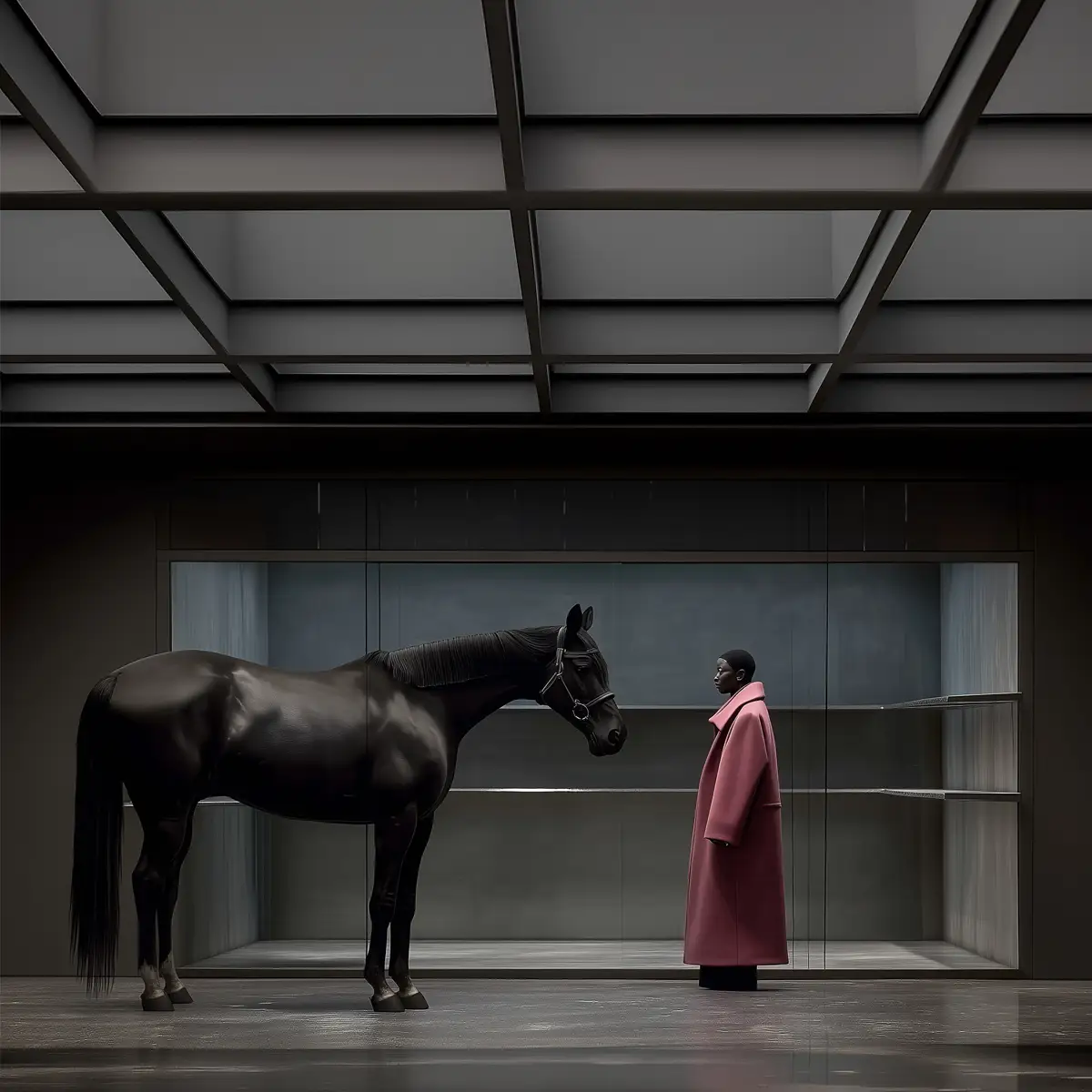
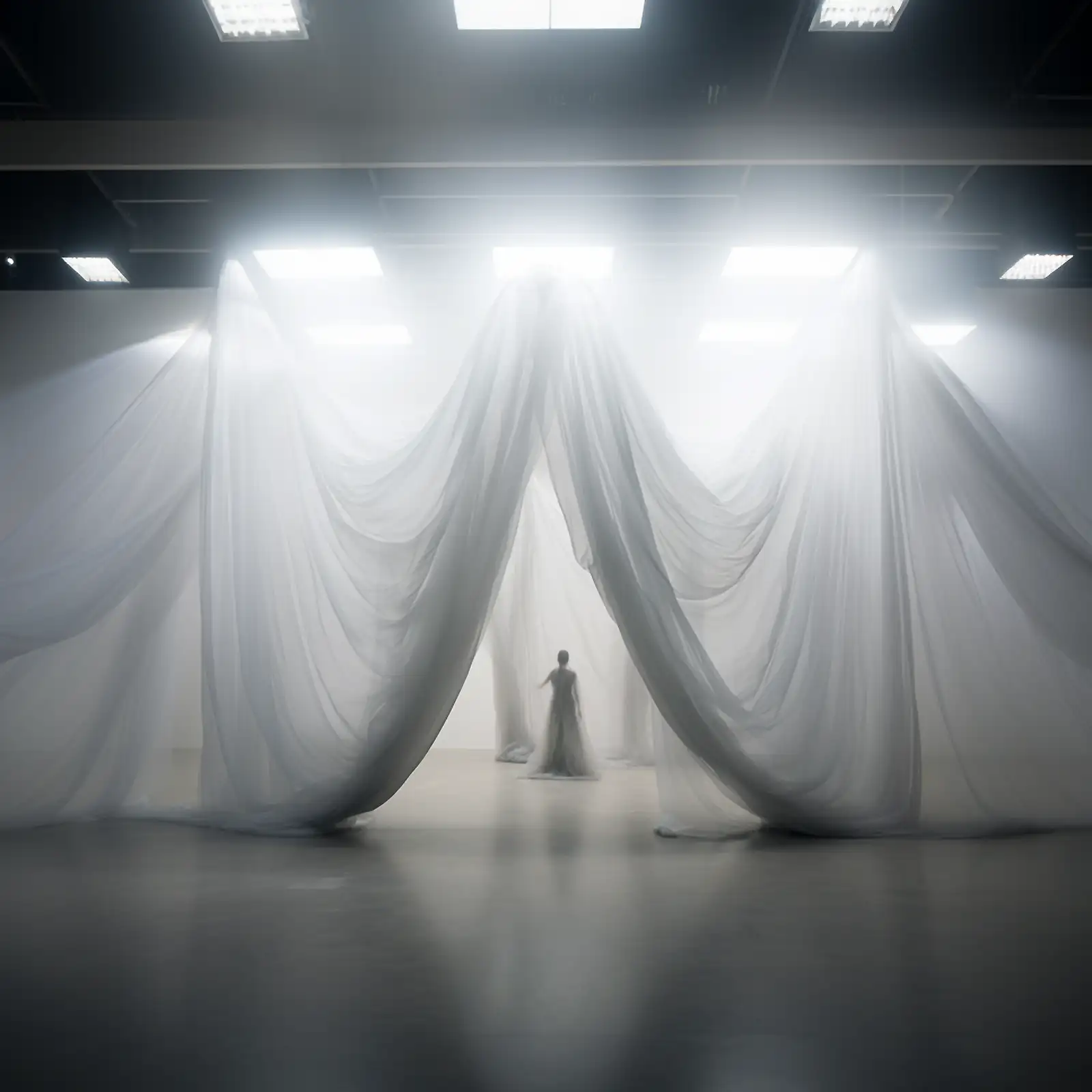
The point of departure is American realism: clear spaces, clean light, everything in its place. Things stand where they belong, and they behave exactly as expected. Nothing insists on itself, nothing contradicts. It is a world that appears complete, because it seems fully explained.
And then, almost imperceptibly, something shifts. No rupture, no fracture—rather a slight lapse in attention on the part of reality. The system does not collapse; it merely tilts, like a glass set a little too close to the edge.
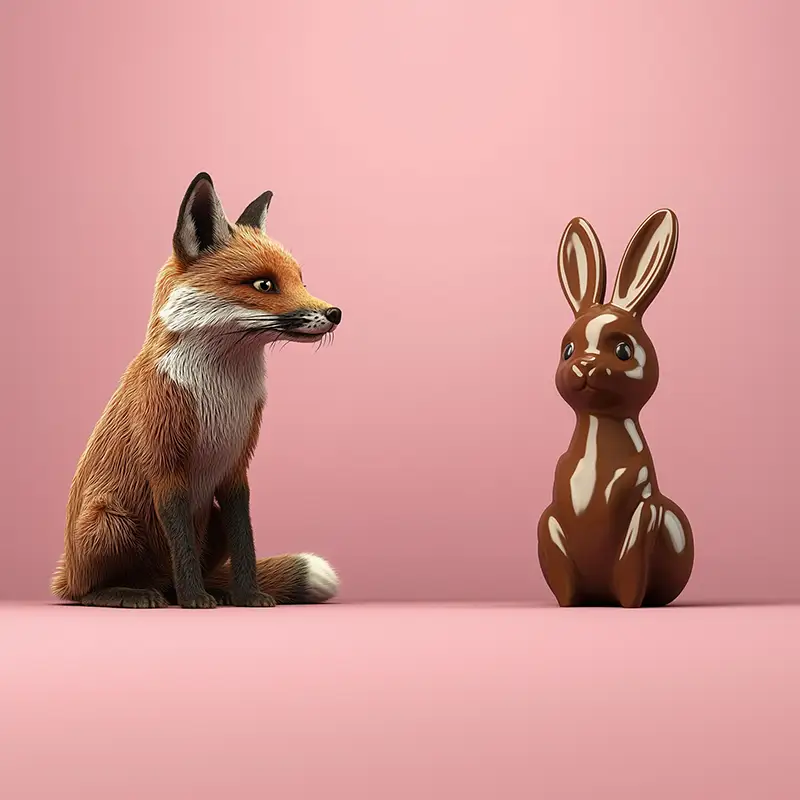
An element enters that does not destroy the order, but quietly questions it. It stands there with the same self-evidence as everything else, and precisely in that lies the disturbance. It fits formally, but not logically. It belongs—and at the same time, it does not.
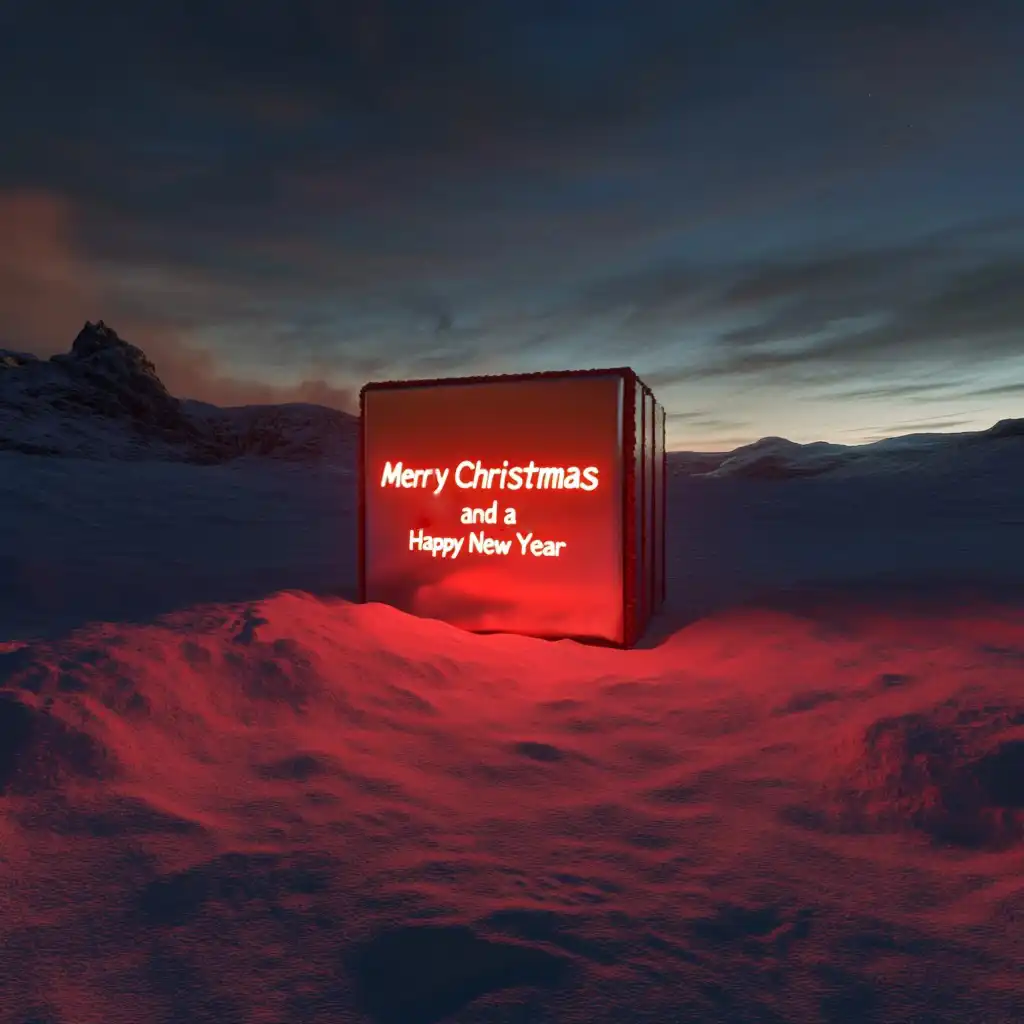
What emerges is a kind of surrealism that has nothing to do with dreams or excess. Nothing floats, nothing dissolves. Everything remains firm, clear, almost courteous. And yet something is wrong. It is a surrealism of surface and precision—one that does not drift away, but remains still and meets your gaze.
The break is quiet. So quiet that at first one suspects an error in oneself. Perhaps one has misunderstood. Perhaps everything is exactly as intended. This uncertainty holds the scene together like an invisible tension.
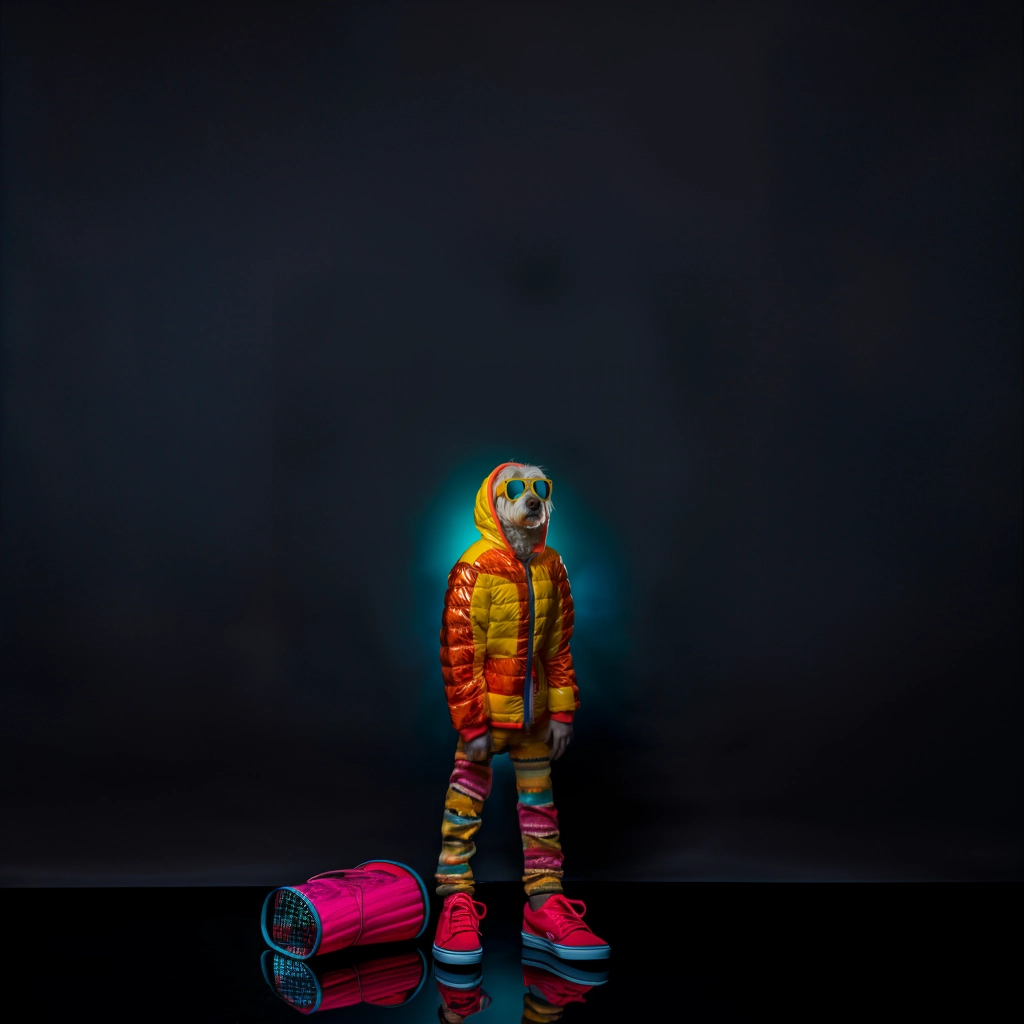
One might call it absurdialism—not as a provocation, but as a description. A world that behaves correctly while containing a small, decisive flaw. And precisely because this flaw is inserted so cleanly, it does not appear as a foreign body, but as a second, hidden order.
In the end, what remains is the sense that everything is right.
And that this, exactly, is the problem.
Ausgangspunkt ist der amerikanische Realismus: klare Räume, sauberes Licht, alles an seinem Platz. Die Dinge stehen dort, wo sie hingehören, und sie tun genau das, was man von ihnen erwartet. Nichts drängt sich auf, nichts widerspricht. Es ist eine Welt, die sich selbst genügt, weil sie vollständig erklärt wirkt.
Und dann, fast unmerklich, verschiebt sich etwas. Kein Knall, kein Riss – eher eine kleine Unaufmerksamkeit der Wirklichkeit. Das System kippt nicht, es neigt sich nur ein wenig, wie ein Glas, das jemand zu weit an den Rand gestellt hat.
Ein Element tritt hinzu, das die Ordnung nicht zerstört, sondern sie lediglich in Frage stellt. Es steht da, mit derselben Selbstverständlichkeit wie alles andere, und gerade darin liegt die Irritation. Denn es fügt sich formal ein, aber nicht logisch. Es gehört hinein – und zugleich nicht.
So entsteht eine Form von Surrealismus, die nichts mit Traum oder Überschwang zu tun hat. Nichts schwebt, nichts zerfließt. Alles bleibt fest, klar, beinahe höflich. Und doch stimmt etwas nicht. Es ist ein Surrealismus der Oberfläche, der Präzision, einer, der nicht entgleitet, sondern stehen bleibt und den Blick erwidert.
Der Bruch ist leise. So leise, dass man ihn zunächst für einen eigenen Fehler hält. Vielleicht hat man sich geirrt. Vielleicht ist alles genau so gemeint. Diese Unsicherheit hält die Szene zusammen, wie eine unsichtbare Spannung.
Man könnte es einen Absurdialismus nennen – nicht als Provokation, sondern als Beschreibung. Eine Welt, die sich korrekt verhält und dabei einen kleinen, entscheidenden Fehler enthält. Und gerade weil dieser Fehler so sauber eingefügt ist, wirkt er nicht wie ein Fremdkörper, sondern wie eine zweite, verborgene Ordnung.
Am Ende bleibt das Gefühl, dass alles stimmt. Und dass genau darin das Problem liegt.

Related Posts
The Seeker
The water seeker stands in water,until the water reaches his neck,yet
Gerhard? Richter!
At first glance, this image might evoke the transitional moment in whi
Der Woke Hund
Semper viverra nam libero justo laoreet sit amet. Pulvinar etiam non q
Der fliegende Chaplin
Semper viverra nam libero justo laoreet sit amet. Pulvinar etiam non q
Hundefotos in den sozialen Medien
Semper viverra nam libero justo laoreet sit amet. Pulvinar etiam non q
Kann Künstliche Intelligenz Kunst auch gruselig?
Semper viverra nam libero justo laoreet sit amet. Pulvinar etiam non q